News
Cultivating Environmental Leaders: Celebrating the Impact of FEE Education Programmes in the Republic of Mauritius
Environmental challenges such as climate change, biodiversity loss and pollution are shaping the world that today's young people will inherit. In this context, environmental education is no longer an option, it is essential instrument for preparing future generations to understand current environmental issues and drive meaningful sustainable solutions in their schools and communities.
Across Mauritius and Rodrigues, over 200 schools are leading efforts to address this challenge, through educational programmes developed by the Foundation for Environmental Education (FEE) and implemented locally by Reef Conservation, the full member and national operator of FEE for the Republic of Mauritius, with the support of the Ministry of Education.
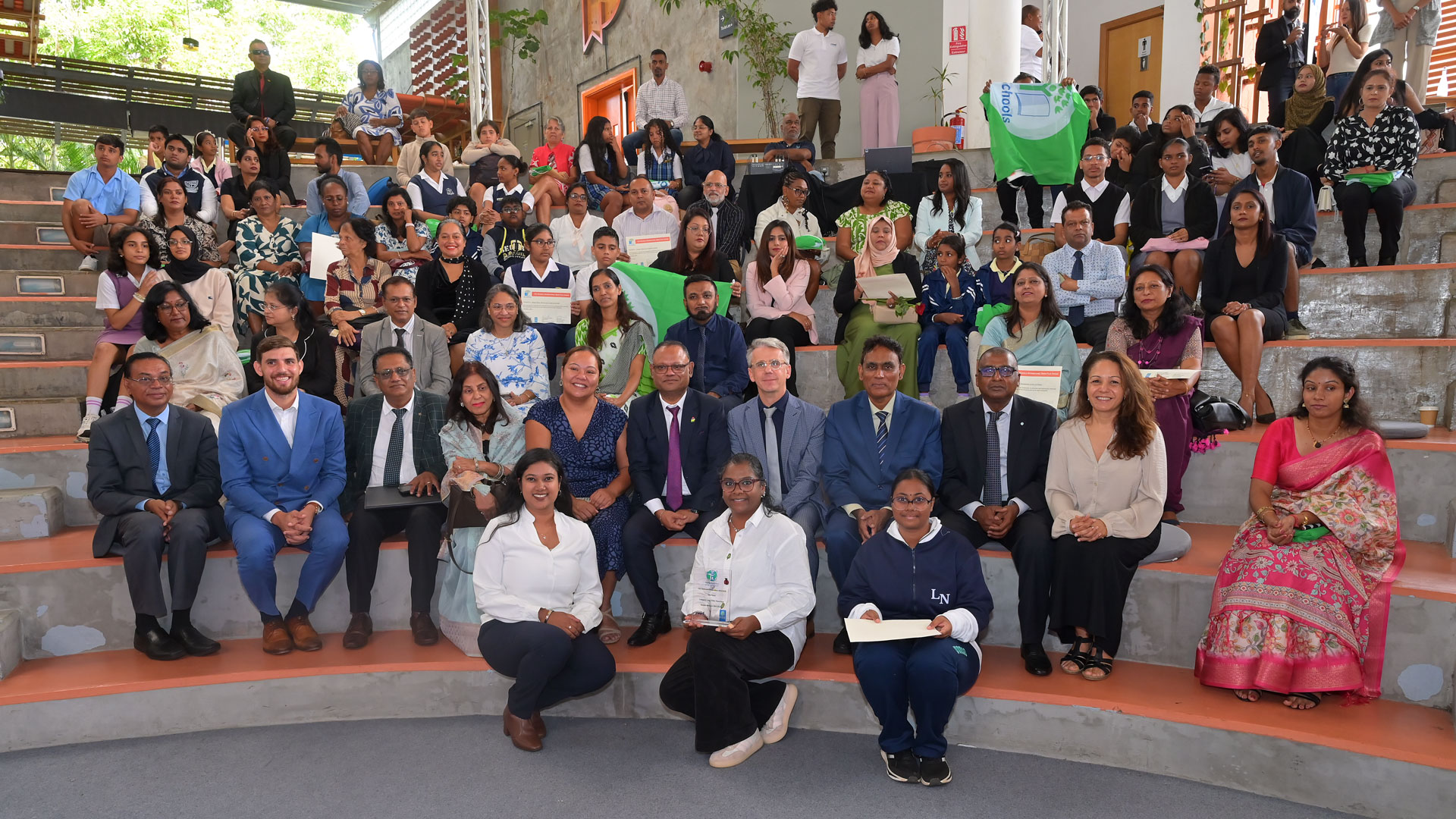
For programme year 2025-2026, we celebrated the commitment of 53 primary and secondary schools under the Eco-Schools Programme and 6 secondary schools as part of the Young Reporters for the Environment Programme. The Ceremony was held at the Institut Français de Maurice, on the 25th May 2026, in presence of the Honorable Minister for Education and Human Resource, Dr Mahend Gungapersad.
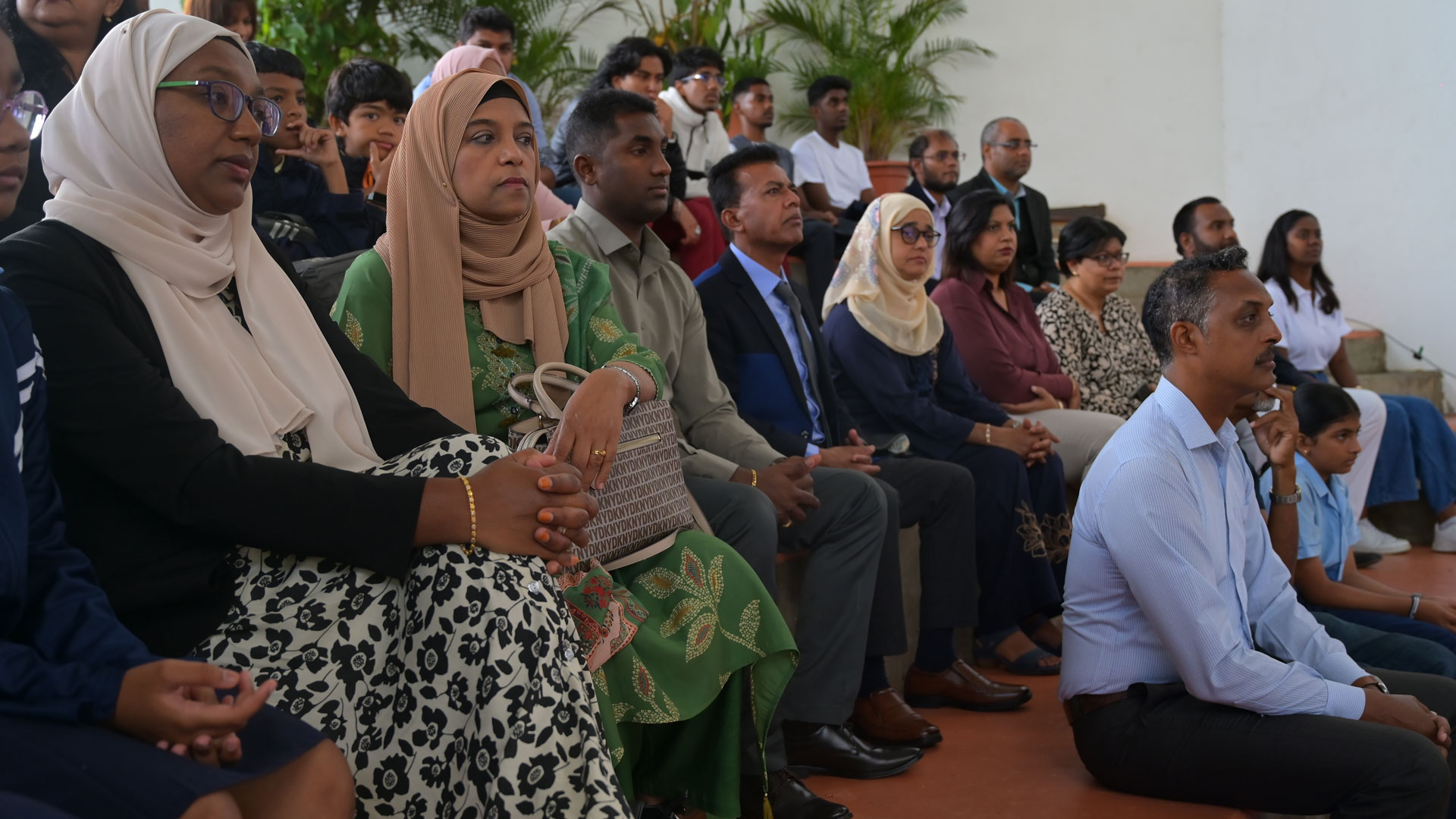
Students, educators, institutional partners and environmental advocates gathered to recognise achievements in sustainability, environmental education and youth engagement.
Building a Culture of Sustainability in Schools
Schools play a crucial role in shaping values, behaviours and attitudes that extend far beyond the classroom. Through the Eco-Schools programme, educational institutions are encouraged to integrate environmental thinking into their daily operations while empowering students to take an active role in creating positive change within their communities.
Launched in 1994, Eco-Schools is a globally recognized programme within the field of Education for Sustainable Development (ESD) implemented in over 90 countries worldwide. Using a Seven Step project-based learning framework and a whole-school approach, students engage in hands-on, active learning to drive positive environmental change in their school and local community.
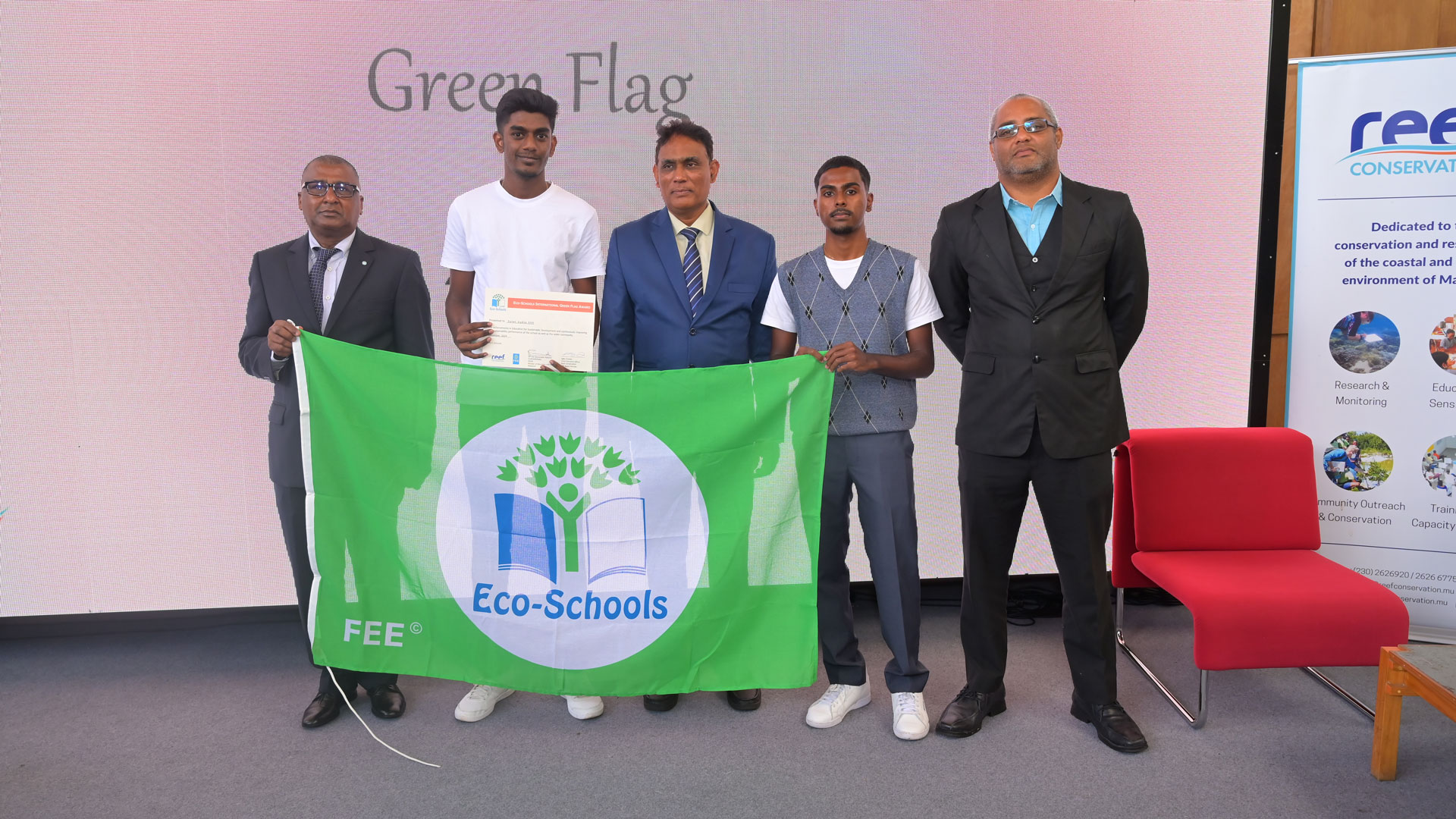
As an accreditation scheme, the Eco-Schools programme recognizes the progressive changes made by educational institutions through the Seven Steps. The prestigious Green Flag is awarded when significant environmental and educational improvements have been made. The Green Flag is renewed periodically to ensure continuous positive development.
The Eco-Schools Programme was launched in 2015 in Mauritius and in 2019 in Rodrigues. Today, Reef Conservation supports 242 primary and secondary schools across Mauritius and Rodrigues through the programme, helping to embed environmental awareness within the educational journey of thousands of young people.
A Milestone for Higher Education
The ceremony also marked a significant achievement for Mauritius' higher education sector.
The University of Technology, Mauritius (UTM) became the first public university in the Republic of Mauritius to receive the Eco-Campus Green Flag Award, an internationally recognised distinction that acknowledges institutional commitment to sustainable development.
Building on the success and impact of Eco-Schools, the Eco-Campus emerged as a natural progression of the internationally recognised Eco-Schools Programme. The initiative aims to extend the whole-institution approach to sustainability to the tertiary education sector. Since 2025, Eco-Campus has officially become a standalone programme under the Foundation for Environmental Education.
This recognition highlights how sustainability is increasingly becoming a shared responsibility across all levels of education, from primary schools to universities.
Education as a Tool for Environmental Action
For Reef Conservation, education has always been a cornerstone of conservation. Alongside scientific research, community conservation and capacity building, environmental education has always been one of the organisation's key pillars.
As environmental challenges become increasingly visible, empowering young people with knowledge and critical thinking skills is essential.
According to Lisa Tang Chong, Senior Education Programme Manager at Reef Conservation: " As the impacts of climate change become increasingly visible and far-reaching, empowering young people with the knowledge, skills and critical thinking needed to understand and respond to environmental challenges has never been more urgent. Environmental education goes beyond raising awareness, it equips the next generation to make informed decisions, inspire positive changes within their communities, and design and implement sustainable solutions that build resilience for the future.
Environmental education goes beyond learning facts about nature. It encourages curiosity, problem-solving, leadership and civic engagement, qualities that are fundamental for addressing the environmental challenges of tomorrow.
Giving Young People a Voice Through Environmental Journalism
During the ceremony, participants of the Young Reporters for the Environment (YRE) programme were also celebrated
For more than three decades, YRE has empowered young people around the world to investigate environmental issues and report on them throughstorytelling, videography and photography
YRE engages participants aged 11-25 in environment-focused journalism, encouraging them to investigate local environmental issues and solutions, and report on them through articles, photos, or videos. The programme develops participants’ skills and knowledge about the environment, enhances communication and citizenship skills, individual initiative, teamwork, critical analysis, social responsibility, and leadership abilities.
The annual YRE National Competition is without a doubt one of the highlights of the YRE programme. Every year, the most inspiring and creative entries from the National Competition compete at the international level and have the chance of being recognized on a global scale.
For programme year 2025-2026, Mauritius has earned international recognition, with the national competition winning submission from students of Ebene SSS Girls in the One Take Photography category, The submission was among the 85 shortlisted entries.
As part of the competition, Reef Conservtion supports the participants by providing mentoring sessions from experts in the field ofjournalism, photography and videography.
In addition, fieldtrips on the year’s theme were organised to support the participants with discovering Mauritius' marine and coastal biodiversity, understand the different ecosystems and ecosystem services, investigate human impacts on them and report on existing solutions to those challenges or even better think of possible solutions by themselves.
Investing in the Next Generation of Environmental Stewards
The success of programmes such as Eco-Schools, Eco-Campus and Young Reporters for the Environment demonstrates the transformative power of education in advancing sustainability.
Whether through student-led environmental projects, institutional commitments to sustainable development or creative storytelling that raises awareness about environmental challenges, these initiatives are helping build a generation that is informed, engaged and empowered to act.
As Mauritius continues to face the realities of climate change and environmental degradation, investing in environmental education remains one of the most effective ways to create lasting change. By equipping young people with the knowledge, skills and confidence to become environmental leaders, these programmes are helping shape a more sustainable future for the island and beyond.
© Reef Conservation. All Rights Reserved. Designed by Design Element